
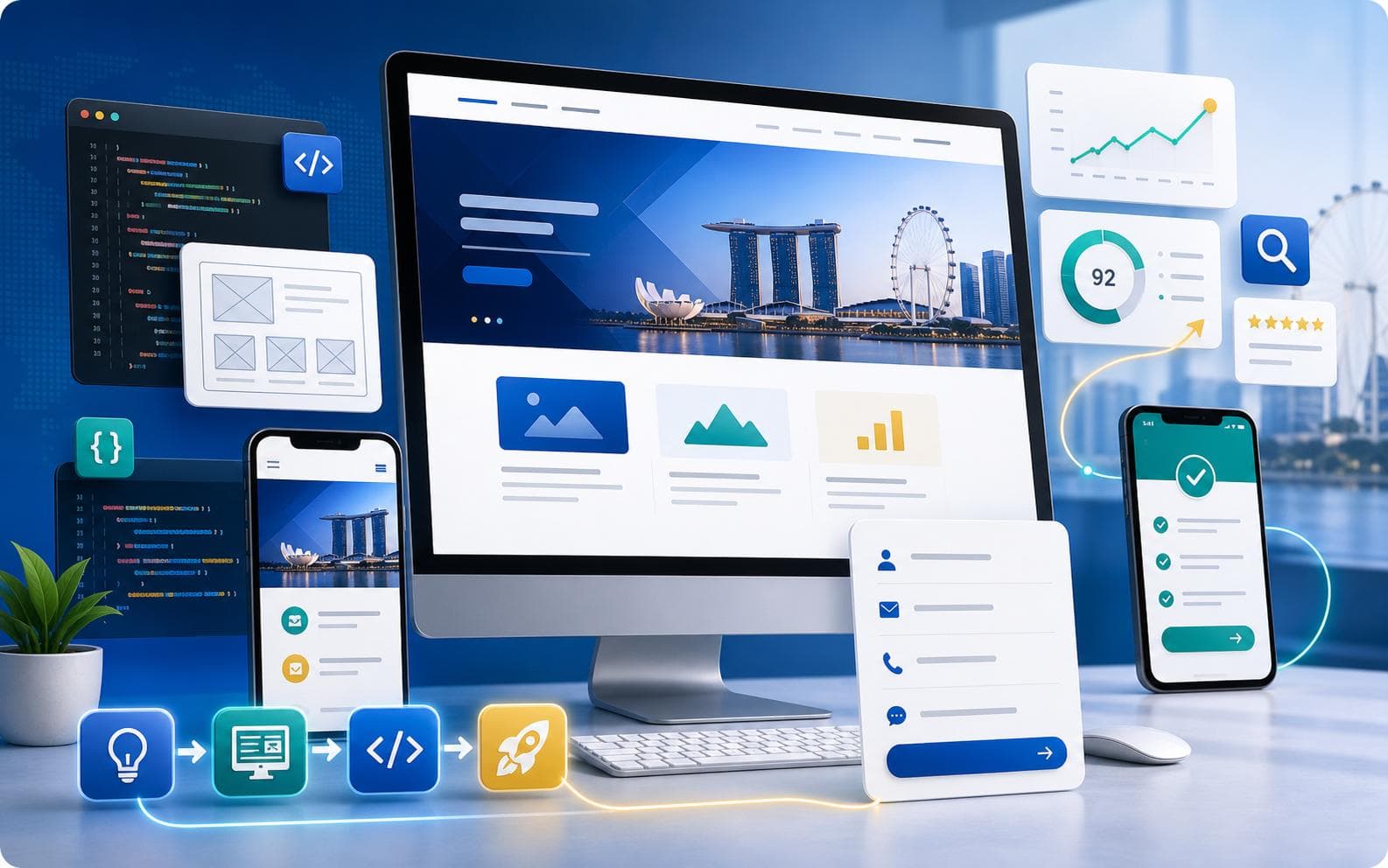
A business website should do more than display your company name and contact details. It should help potential customers understand your services, explore your solutions, and take the next step with confidence.
However, many businesses struggle with slow pages, outdated designs, poor mobile experiences, and websites that are difficult to manage. These problems can affect customer trust and make it harder for visitors to find the information they need.
This is where IT website services can help. From website development and custom functionality to SEO, integrations, and ongoing maintenance, the right solutions can make your website more useful for your business and your customers.
What Are IT Website Services?
IT website services include the technical and creative work required to build, improve, secure, and maintain a website.
Depending on your business needs, these services may cover everything from designing a new website to connecting it with business tools and improving its performance.
Common IT website services include:
Website design and responsive development.
Custom website and web application development.
E-commerce website development.
Content management system (CMS) setup.
Search engine optimisation (SEO).
Website speed and performance optimisation.
API integrations and workflow automation.
Website security, maintenance, and technical support.
For example, a small consultancy may need a professional website with service pages and enquiry forms. An online retailer may require product management, payment integration, and inventory updates. Both need website services, but their technical requirements are different.
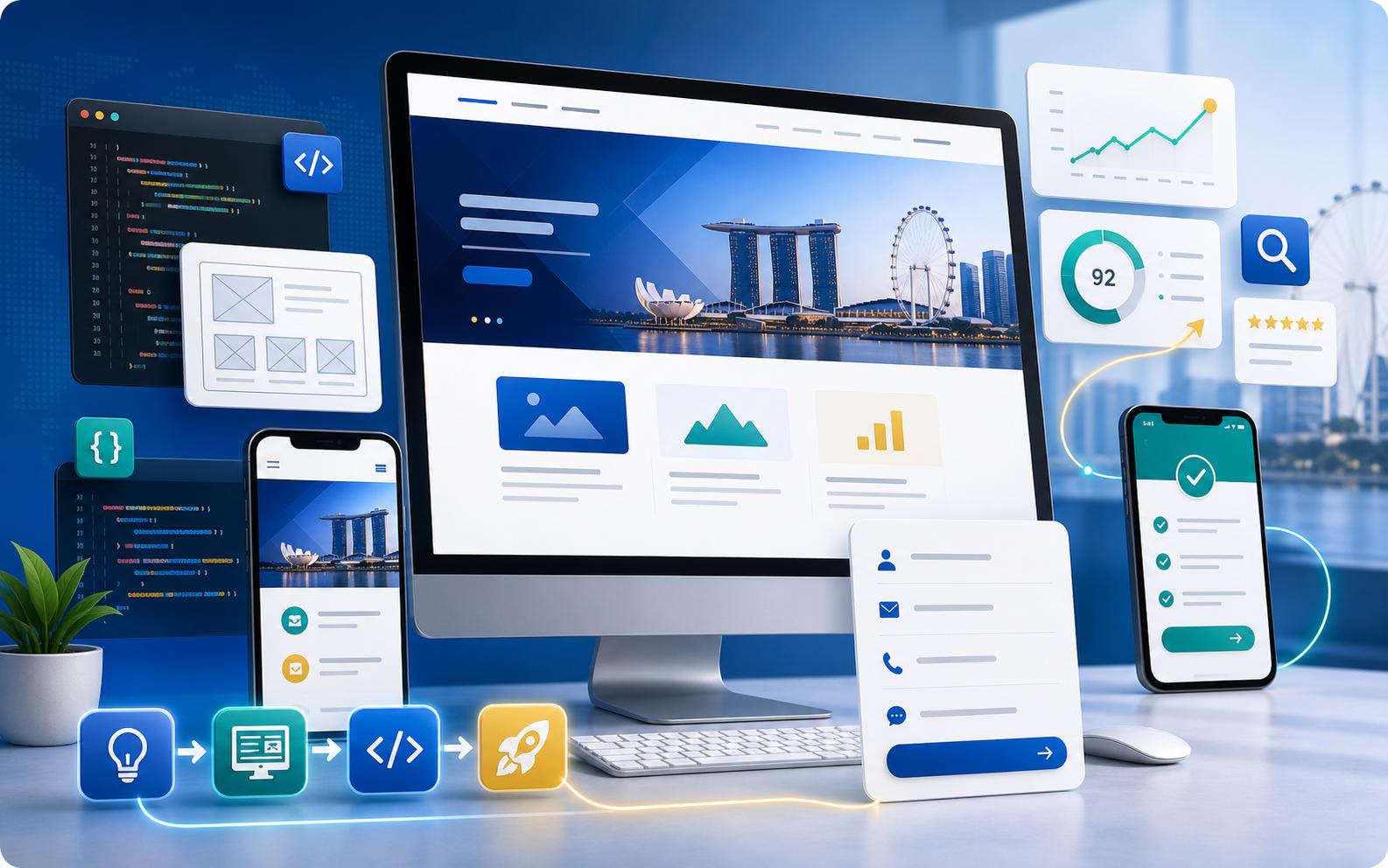
Why Does Your Business Need Professional Website Services?
A website that looks attractive but fails to meet customer needs can create unnecessary problems. Professional development focuses on making the website functional, accessible, and suitable for your business goals.
1. Create a Better Mobile Experience
Customers may visit your website from smartphones, tablets, and desktop computers. A responsive website adjusts its layout to different screen sizes, helping visitors navigate without unnecessary zooming or scrolling.
2. Improve Website Speed
Slow pages can interrupt browsing and discourage visitors from exploring your services. Optimising images, scripts, caching, and server performance can help pages load more efficiently.
You can assess page performance using Google PageSpeed Insights, which provides performance measurements and suggestions for improvement.
3. Make Your Website Easier to Find
An SEO-friendly website has a clear structure, useful content, descriptive page titles, and crawlable links. These elements help search engines understand your pages.
Follow Google's SEO Starter Guide to understand the fundamentals of making website content easier to discover.
SEO best practices can improve search visibility, but they do not guarantee a particular ranking.
4. Connect Your Website With Business Tools
Your website may need to exchange information with a CRM, payment gateway, booking system, email platform, or inventory application.
API integrations allow compatible systems to communicate, reducing manual work and helping information move between tools.
5. Keep Your Website Secure and Updated
Outdated software, weak access controls, and unmaintained plugins can create security and reliability risks. Regular updates, backups, access reviews, and testing help keep your website in better condition.
Types of IT Website Development Services
Not every business needs the same solution. Understanding the main service categories helps you choose the right starting point.
Business Website Development
A business website presents your company, services, expertise, and contact information. It is suitable for consultants, local businesses, service providers, and growing companies that need a professional online presence.
Custom Web Development
Custom development is useful when ready-made templates or plugins cannot support your requirements. A business might need a customer portal, a reporting dashboard, role-based access, or a specialised booking workflow.
Learn more about custom web development and how tailored functionality can support specific business processes.
E-commerce Website Development
An e-commerce website helps businesses display products, manage orders, accept payments, and provide customers with a convenient shopping experience.
The solution should reflect the size of your catalogue, payment requirements, shipping arrangements, and inventory processes.
SEO-Friendly Website Development
SEO should be considered during development rather than treated only as a post-launch task. Clear page structures, useful content, mobile usability, and accessible internal links can support both users and search engines.
Explore SEO-friendly website development for more information about building a website with search visibility in mind.
How to Choose the Right IT Website Services
Before hiring a development provider, consider the problems you want to solve and the resources available to your business.
Define your business goals. Decide whether you need more enquiries, online sales, better customer support, or improved internal workflows.
List the required features. Identify essential pages, forms, integrations, payment options, and user permissions.
Check mobile usability and performance. Make sure the proposed solution considers different devices and page-loading behaviour.
Discuss SEO requirements. Ask about site structure, metadata, indexing, redirects, and technical SEO.
Clarify maintenance and ownership. Confirm who controls the domain, hosting, website files, accounts, and backups.
Understand the scope and budget. Request a breakdown of deliverables, timelines, exclusions, support, and future maintenance costs.
Google's Search Essentials also provide useful guidance on technical requirements and search best practices.
Website Templates vs Custom Website Development
The right approach depends on your budget, technical requirements, and plans for future growth.
Factor | Template-based website | Custom website development |
|---|---|---|
Initial setup | Often quicker | Depends on project scope |
Upfront cost | Often lower | Can be higher |
Design flexibility | Limited by the template and platform | Can be tailored to requirements |
Special functionality | May require plugins or workarounds | Can be developed for specific needs |
Integrations | Depends on platform support | Can be built around compatible systems |
Ongoing maintenance | Still required | Still required |
Best suited for | Standard websites and simpler requirements | Unique workflows and specialised features |
A template is not automatically a poor choice, and custom development is not always necessary. Start with the simplest solution that meets your actual requirements and allows a practical path forward.
What Makes a Website Fast, Accessible, and Reliable?
Good website development considers more than appearance.
Performance: Optimise large images, unnecessary scripts, and resource loading.
Accessibility: Use readable text, keyboard-friendly navigation, meaningful labels, and sufficient contrast.
Security: Apply appropriate access controls, software updates, backups, and secure connections.
Usability: Keep navigation clear and make important actions easy to find.
Search readiness: Use descriptive titles, helpful page content, and logical internal links.
For performance measurement, Google's Core Web Vitals documentation explains loading speed, responsiveness, and visual stability metrics.
Review these areas before launch and continue checking them as your website evolves.
How SiteGrowza Can Help With IT Website Services
SiteGrowza helps startups, small businesses, local brands, and growing companies develop websites suited to their business needs.
Depending on your requirements, the work may include responsive website development, custom functionality, e-commerce solutions, SEO-friendly structures, API integrations, automation, performance optimisation, and ongoing technical support.
The process should begin with understanding your business, audience, current website challenges, and required features. From there, you can prioritise essential improvements instead of investing in functionality that does not serve a clear purpose.
If you are planning a new website or improving an existing one, explore SiteGrowza's website development and digital services to understand the available solutions.
Conclusion: Choose IT Website Services That Fit Your Goals
The right IT website services can help you build a website that is easier to use, maintain, and improve as your business grows. The best solution depends on your audience, required features, budget, and long-term plans.
Start by identifying the biggest problems with your current website or the essential features your new website needs. Then choose a development approach that addresses those requirements without adding unnecessary complexity.
Ready to improve your business website? Visit SiteGrowza to explore website development solutions and discuss the requirements of your next project.