
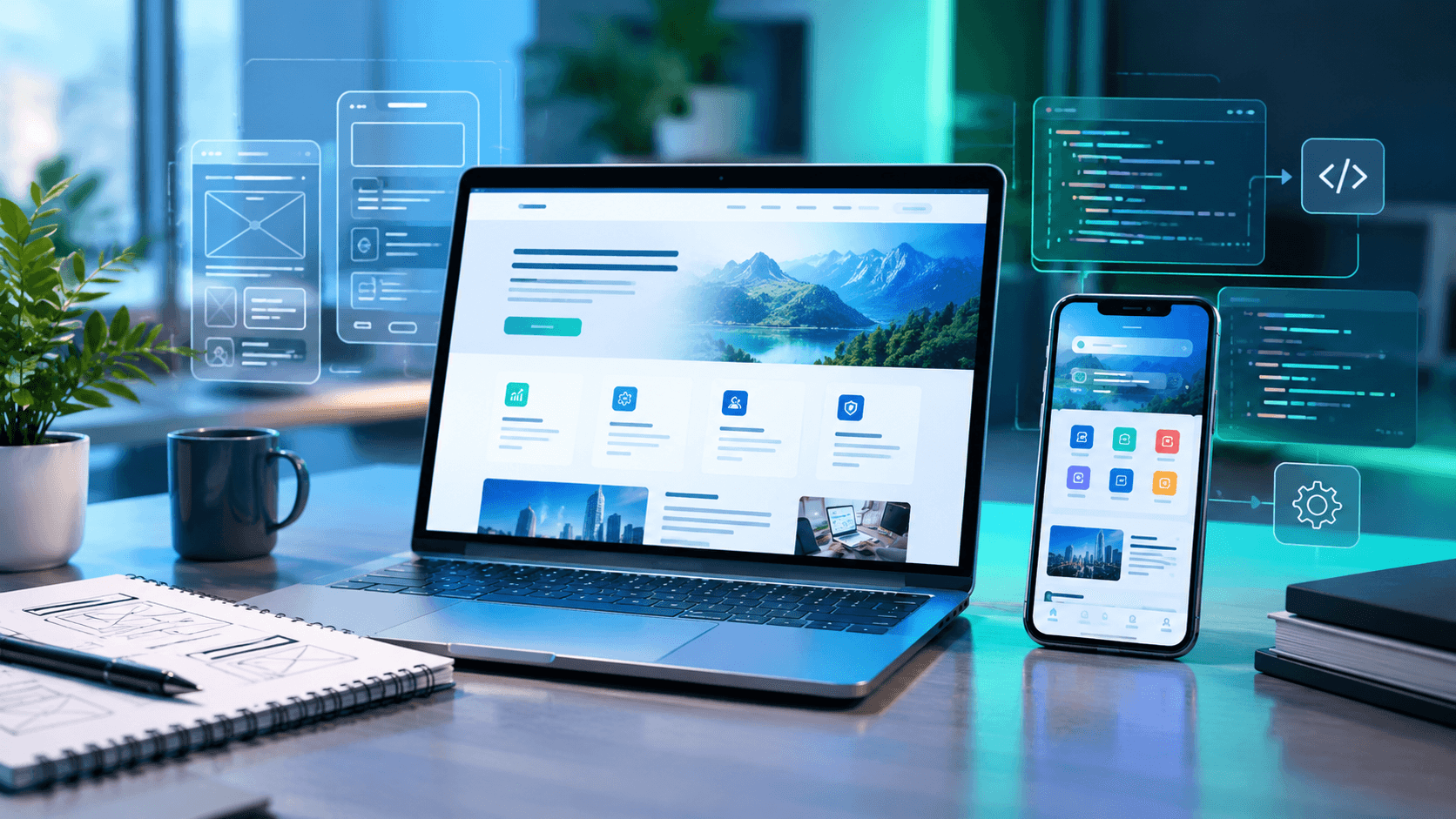
Discover how website and app development companies build responsive websites, mobile apps, and custom web applications. Explore key services, costs, and tips to choose the right development partner for your business.
Choosing between website and app development companies can be challenging when your business needs a professional website, a mobile app, or a custom digital platform. The right development partner should understand your business goals, target audience, budget, and technical requirements before recommending a solution.
For startups, small businesses, and growing companies, the goal is not simply to launch a digital product. It is to build a reliable online experience that customers can use easily and that your business can maintain as it grows.
This guide explains what website and app development companies do, which services they provide, how much development may cost, and what to check before selecting a company in India or elsewhere.
What Do Website and App Development Companies Do?
Website and app development companies help businesses plan, design, develop, test, launch, and maintain digital products. Depending on their capabilities, they may build business websites, e-commerce stores, mobile applications, web applications, customer portals, and internal dashboards.
A website typically introduces your business, presents its products or services, and generates enquiries or sales. A mobile app can offer dedicated features on smartphones, while a web application lets users complete tasks through a browser.
For example, a local service business may need a responsive website with enquiry forms, while an online retailer may require an e-commerce store connected to inventory and payment systems. A company managing several teams might need a custom dashboard to monitor operations.
The right solution depends on the problem you want to solve, rather than the technology that happens to be popular.
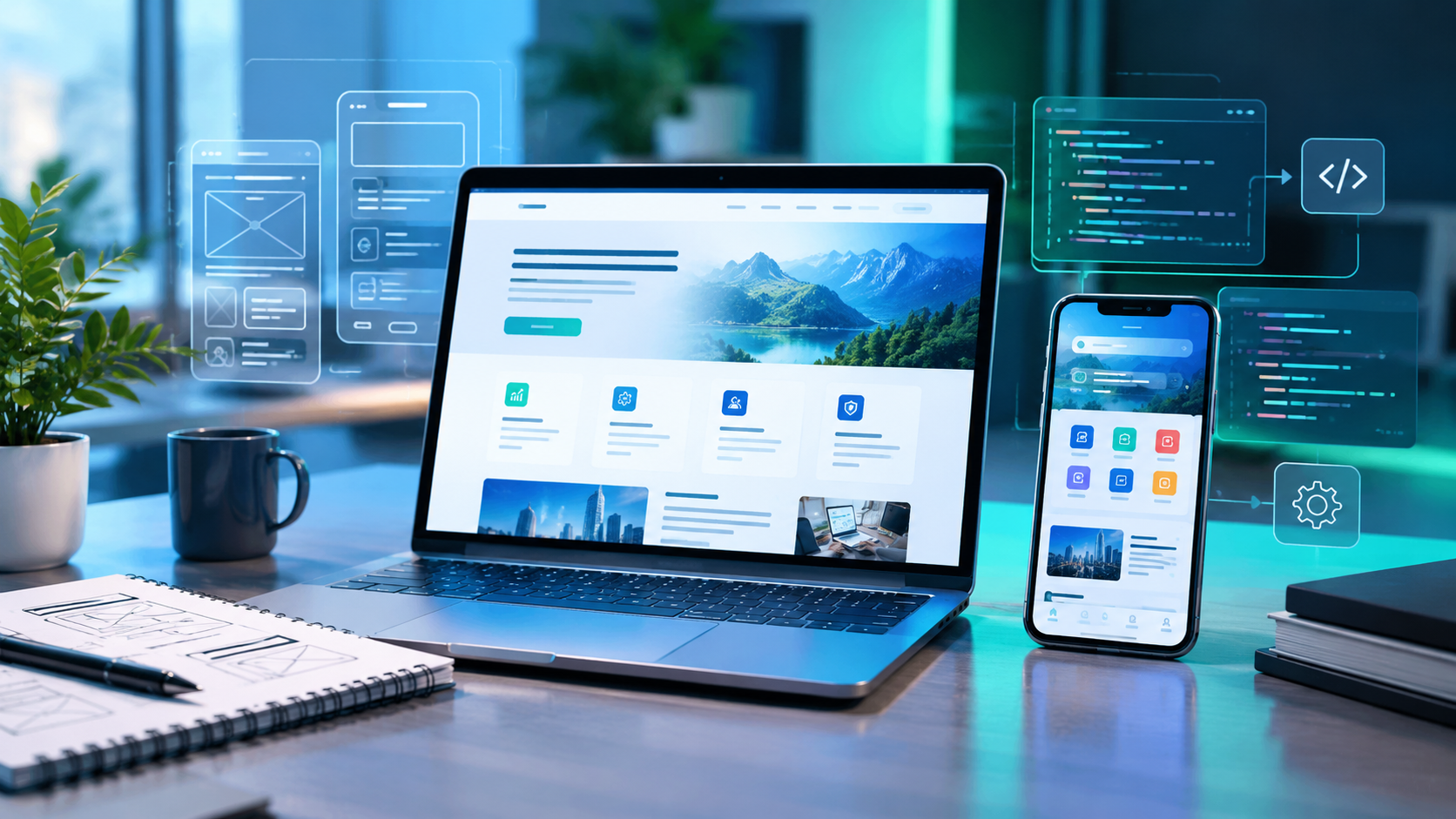
Types of Website and App Development Services
1. Business Website Development
A business website establishes your online presence and helps potential customers understand your services, credibility, and value. Common features include service pages, enquiry forms, testimonials, contact information, and clear calls to action.
A professional website should be mobile-friendly, easy to navigate, and structured to support search engine visibility.
2. Mobile App Development
Mobile app development focuses on applications designed for smartphones and tablets. Businesses may choose native applications for individual operating systems or cross-platform development to support multiple platforms with a shared codebase.
Typical use cases include booking applications, customer loyalty programmes, delivery tracking, employee tools, and online shopping apps.
The best approach depends on required features, device capabilities, budget, performance expectations, and ongoing maintenance needs.
3. Web Application Development
A web application is an interactive system accessed through a web browser. Unlike a basic informational website, it may allow users to log in, manage records, complete transactions, generate reports, or interact with personalised data.
Examples include customer portals, booking systems, CRM platforms, inventory tools, and reporting dashboards.
A custom web application development services approach can be useful when ready-made software does not fit your business workflows or integration requirements.
4. E-commerce Website Development
E-commerce development helps businesses sell products and services online. Features may include product catalogues, shopping carts, payment gateways, order tracking, inventory management, and customer accounts.
The platform should suit your catalogue size, operational needs, payment requirements, and ability to manage products and orders.
5. Custom Web and App Development Services
Custom development is appropriate when a business needs specific functionality that standard templates or off-the-shelf tools cannot provide efficiently.
A custom solution may combine a customer-facing website, an administrative dashboard, third-party APIs, automated notifications, and reporting tools. Before development begins, define the essential features and prioritise those that solve the most important business problems.
Key Benefits of Hiring a Website and App Development Company
Working with a suitable development partner can help businesses establish a stronger digital presence and manage their technology more effectively.
Better user experience: Clear navigation and intuitive interfaces make it easier for visitors to find information and complete tasks.
Business-specific functionality: Custom features can support workflows that generic software does not handle well.
Improved accessibility: Responsive websites allow users to browse across different screen sizes and devices.
Connected business systems: API integrations can link websites and applications with CRMs, payment tools, booking systems, and other platforms.
Room for growth: Well-planned architecture can make future features and integrations easier to introduce.
Simplified operations: Automation can reduce repetitive tasks, manual data entry, and avoidable administrative work.
These benefits depend on project planning, implementation quality, user adoption, and ongoing maintenance. Hiring a development company does not automatically guarantee more sales, higher rankings, or business growth.
How to Choose the Right Website and App Development Company
Understand Your Project Requirements
Before contacting a developer, identify the main purpose of your project. Decide whether you need a business website, e-commerce platform, mobile app, web application, or a combination of these.
Prepare a list of essential features, target users, integrations, expected launch timeline, and future requirements. Clear requirements make proposals easier to compare.
Review Relevant Experience and Work Samples
Ask potential providers to share examples of work relevant to your project. Look for functional similarities, design quality, mobile usability, loading performance, and the complexity of the features delivered.
Check references where available, and distinguish verified project outcomes from general marketing claims.
Evaluate Technical and Security Practices
Ask how the company approaches testing, access controls, data protection, backups, deployment, and maintenance. If the application handles sensitive customer information or payments, identify applicable security and compliance requirements early.
The development team should explain its technical choices in language you can understand.
Compare Pricing and Project Scope
Do not compare proposals on price alone. Review what each quotation includes, such as design, development, content migration, integrations, testing, deployment, documentation, and post-launch support.
A lower initial quotation may exclude important features or ongoing costs. Request a written scope and clarification of how additional requirements will be priced.
Check Communication and Ongoing Support
A reliable working relationship requires clear milestones, progress updates, defined responsibilities, and a process for handling changes.
Confirm who will manage the project, how feedback will be shared, who owns the source code and intellectual property, and what happens when the project launches.
How Much Do Website and App Development Services Cost?
The cost of website and app development varies according to the project's complexity, design requirements, technology, integrations, security needs, and delivery timeline.
A basic business website generally requires less development effort than a custom web application with user accounts, payment processing, and multiple integrations. A mobile app supporting two operating systems may also require additional design, testing, and maintenance work.
Consider these common cost factors:
Number of pages, screens, and user roles.
Complexity of design and business logic.
Third-party services and API integrations.
Hosting, infrastructure, and data storage.
Testing, security, and accessibility requirements.
Updates, support, and future feature development.
Request an itemised proposal rather than relying on a generic price estimate. The proposal should identify deliverables, exclusions, milestones, payment terms, and expected recurring costs.
The Website and App Development Process
A structured process helps reduce misunderstandings and unnecessary rework.
Discovery and planning: Define business goals, users, features, and project scope.
UI/UX design: Develop user flows, layouts, and prototypes where appropriate.
Development: Build the website or application and integrate required services.
Testing: Check functionality, responsiveness, security considerations, and compatibility.
Launch: Deploy the product, configure the required environment, and verify essential workflows.
Maintenance: Address bugs, apply updates, monitor performance, and plan improvements.
The exact process and timeline depend on the project. More complex systems may need additional planning, migration, compliance reviews, or phased releases.
Why Consider SiteGrowza for Your Digital Project?
SiteGrowza helps startups, small businesses, and growing companies with website development and related digital solutions. Depending on your requirements, you can explore SiteGrowza's web development services for responsive business websites, custom development, and conversion-focused experiences.
Businesses that need dashboards, workflow automation, or connections between existing tools can also discuss their requirements and identify an appropriate technical approach.
If you are planning a new website or digital platform, visit SiteGrowza to explore the available services. You can also contact the SiteGrowza team to discuss your project goals, required features, and next steps.
Conclusion
The best website and app development companies focus on more than writing code. They understand business requirements, recommend suitable technologies, communicate clearly, and plan for testing, security, scalability, and long-term support.
Before making a decision, compare relevant experience, technical capabilities, project scope, pricing, communication, and ownership terms. A clear understanding of your goals will help you select a development partner and build a digital product that fits your current needs while allowing room for future improvements.